
Mental/behavioural healthcare / Emergency care
Sensory-focused behavioural health room technology wins multiple awards
By Andrew Sansom | 18 Oct 2022 | 0
Health technology provider Royal Philips has received a coveted Center for Health Design award for its behavioural health rooms, co-developed with Children’s Medical Center Dallas and social solutions software company Recornect.
The company’s Ambient Experience behavioural health rooms achieved a gold-level Touchstone Award, in recognition of the technology humanising mental healthcare delivery in the hospital’s emergency department, through the combination of a resilient touchscreen interface, lighting, sound, video projection, and therapeutic content to de-escalate patient behaviours that impact patient and staff safety. By allowing staff to connect with patients in new and interactive ways, the solution also helps deliver therapy more quickly.
“Since the start of the Covid-19 pandemic, we’ve seen an increase in the amount of young people feeling extremely sad about their lives,” said Geneva Burnap, senior director, emergency services at Children’s Health. “Instead of sitting in an emergency room for days with nothing to do, which can worsen their condition, Philips’ solution now gives them the chance to really make it their own space. In addition, our staff are now even more comfortable interacting with patients, regardless of the patient’s age or condition.” 
Sean Carney, chief design officer at Philips, said: “Coming from the Center for Health Design, an organisation founded on the vision of creating healthcare facilities that promote healthier environments for patients and staff, [the] Touchstone Award has a very special meaning for Philips,” said Sean Carney, chief design officer at Philips. “Using our human-centred design approach, we’re able to help improve the patient and staff experience, calm behavioural health patients so they can be treated better and more quickly, ultimately improving outcomes and reducing the cost of care.”
The Touchstone Award follows a range of other accolades received by Philips for its behavioural health room solution. These include an ‘IDEA 2022 Gold Award – Medical & Health’ from the Industrial Designers Society of America, an ‘Innovation by Design Award 2022’ from Fast Company, and a winner ‘Health & Wellness Award’ from Core77. In March this year, the solution also received an honourable mention in Fast Company’s ‘World Changing Ideas 2022’ list.
In addition to Children’s Medical Center Dallas, similar behavioural health rooms have also recently been installed in the emergency department of Oklahoma Children’s Hospital, OU Health.
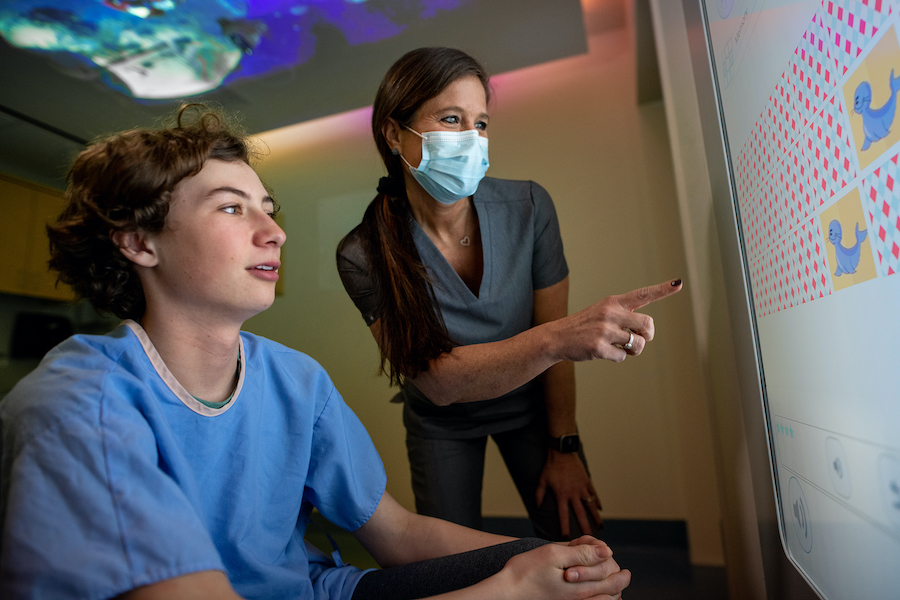 Human-focused innovation
Co-development of the Ambient Experience behavioural health rooms for Children's Medical Center Dallas was led by Philips Experience Design, a dedicated group within the firm that works collaboratively with clinicians, patients, and consumers to co-create solutions that improve patient and staff experience. The group combines specialists in the design of spaces, software, services, and multimedia content, to create innovations that offer hospital patients and staff an engaging and pleasant experience. Their work, says Philips, can be applied to virtually any hospital setting – from radiology rooms, cath labs, and operating rooms, to preparation and recovery areas, reception areas and waiting rooms.
This design approach focuses on fulfilling four interlinked objectives – providing patients with the physical and emotional comfort they need; supporting staff-patient contact and communication; actively involving patients in their care; and optimising working environments and departmental efficiency. Reducing patient anxiety by providing physical and emotional support enables better patient-staff communication, leading to improved patient cooperation, satisfaction, and loyalty.
Actively involving patients in their care leads to a greater sense of empowerment and better therapy compliance. Operational efficiency improvements free up time for clinicians to focus on their patients, potentially leading to more personalised care and better patient outcomes. All these benefits combine to enhance the staff and patient experience, helping improve patient satisfaction scores, reduce staff burnout, and increase staff retention.