

Science & research / Arts and health
NHP offers chance to re-evaluate arts in healthcare, research proposes
By Andrew Sansom | 20 Feb 2024 | 0
Healthcare capital projects, including those falling under the umbrella of the UK’s New Hospital Programme (NHP), offer an opportunity to re-examine the contribution of art to the hospital environment. This is one of several important conclusions drawn from a new research report by a UK arts curator, who for the past decade has been developing and implementing arts schemes in hospitals.
Vivienne Reiss, former joint head of art at Great Ormond Street Hospital – and whose recent projects include working with the arts team at Cambridge University Hospitals and developing arts strategies for Cambridge Children’s Hospital and Cambridge Cancer Research Hospital – was awarded a Churchill Fellowship to explore how art is applied in hospitals outside of those in the UK.
Reiss set out to explore arts projects in general, paediatric, and psychiatric hospitals that could offer insights into site-specific art projects with strong curatorial concepts; stakeholder and service user engagement and co-creation processes; interpretation and associated arts programmes; and research and evaluation in relation to art, health and wellbeing outcomes. She undertook visits to hospitals in Denmark, Sweden and Japan, with her research looking to consider how a blueprint can be created for new ways of commissioning art in UK health settings, in order to raise the bar.
Approaches to commissioning art
Encountering several approaches to commissioning art, Reiss categorised the case studies of the projects she visited under three headings: ‘Designed environments’, ‘A sense of place’, and ‘Art encounters’. 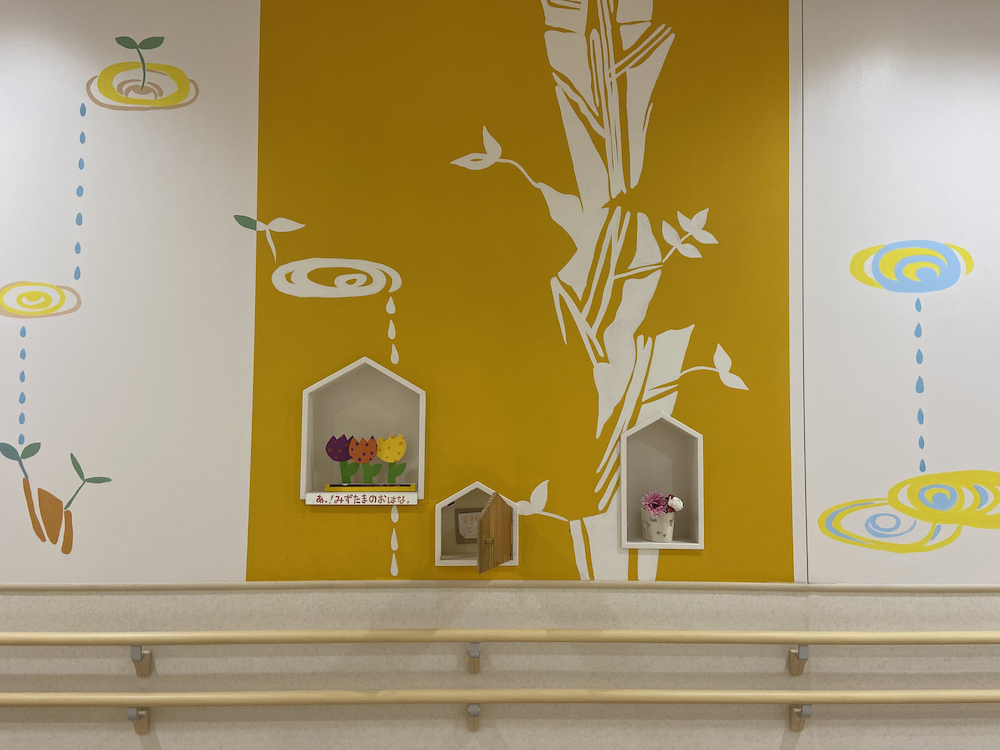
The ‘Designed environments’ group of projects involve art programmes that play a key role in enhancing the interior design through introducing colour in myriad ways. Artworks are typically two-dimensional, applied directly onto walls or surfaces, and use a range of materials, such as paint, vinyl and tiles. The art schemes enhance the environment by contributing to wayfinding and the patient journey; supporting functional aspects of the environment; adding warmth and colour; and offering distraction, respite and joy.
The term ‘sense of place’ refers to the way that integrated art programmes create a distinctiveness or identity for hospitals. In these projects, art is said to add another dimension to the architecture, animating the building and bringing life to the hospital environment. These projects have involved site-specific, innovative and dynamic artworks, which can be interacted with while moving around the building, help with the development of motor skills, or used to create multi-sensory experiences. The artworks enhance the hospital environments by creating character and identity for the hospital; introducing life, texture and colour to the building or landscape; inspiring hope and creating an uplifting atmosphere; encouraging interaction and creating welcoming environments; and developing visual markers and contributing to wayfinding.
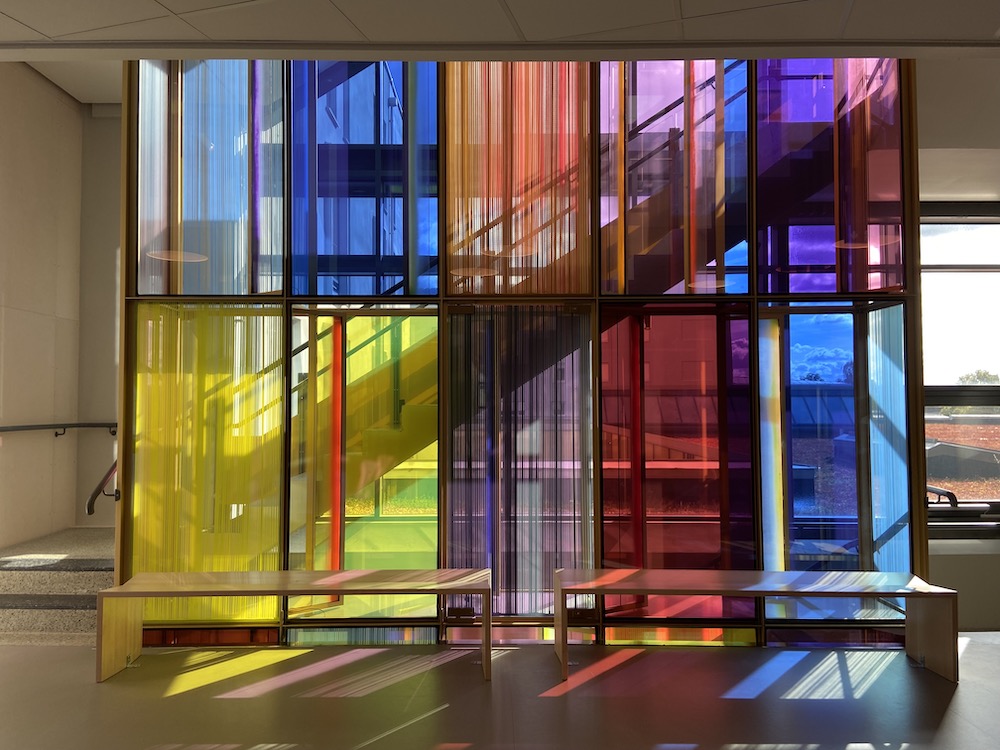
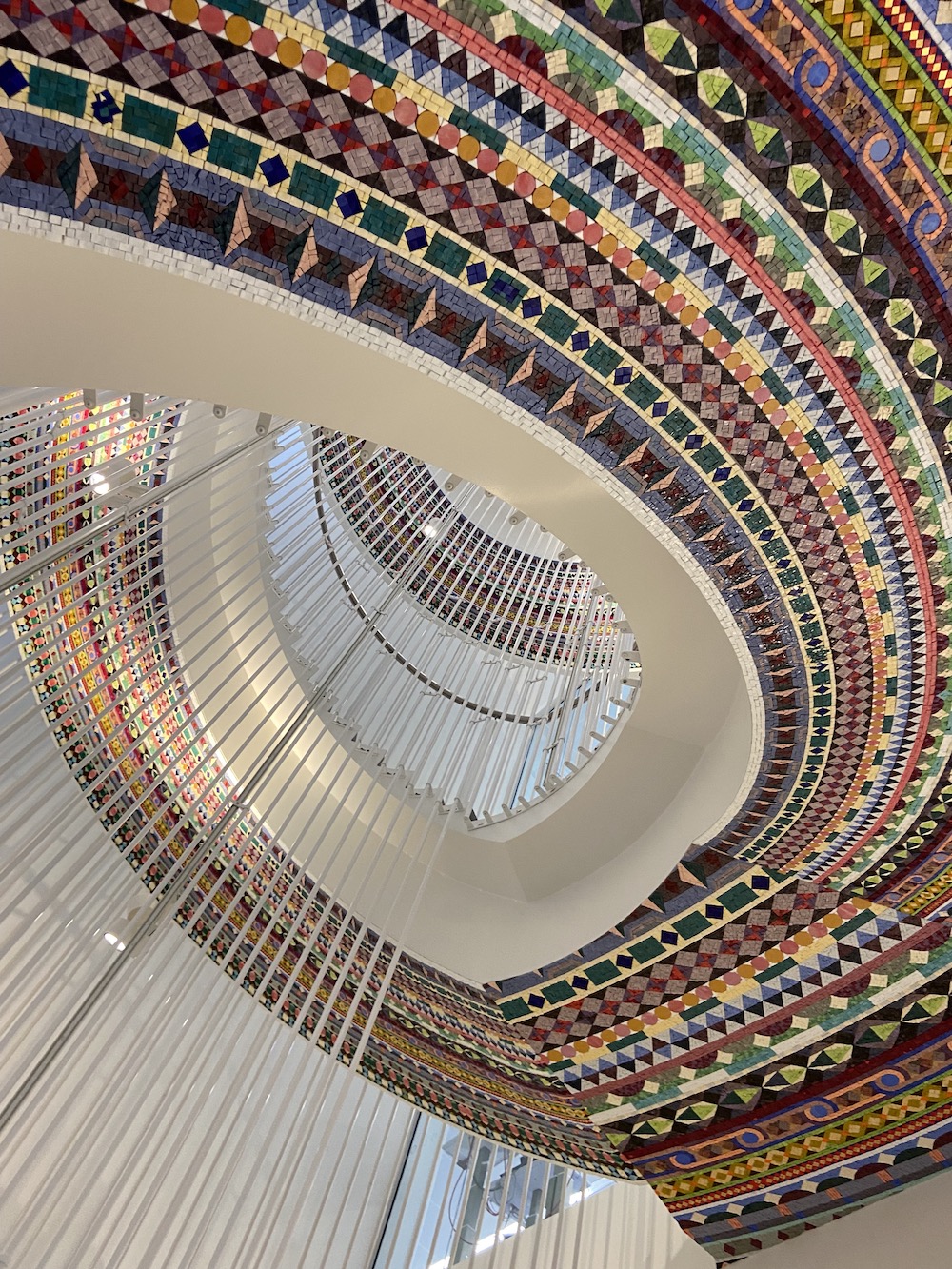 Finally, the ‘Arts encounters’ case studies comprise schemes where art is not only part of shaping the design but also creates a narrative for a place or experience, also contributing to service delivery. The curators and artists involved in these projects are interested in hospital communities, while the art itself is described as “relational, and interaction and dialogue are part of the process and engagement”. The art here facilitates intimate experiences and shared social interactions. It also offers respite from day-to-day clinical life and helps shift emotions and institutional culture. The art is said to express a vision about the hospital and its communities by conveying positive messages and encouraging resilience; creating surprising and delightful experiences and activating the senses; forging connections between people and creating a sense of community and civic pride; and personalising care and addressing emotional concerns.
Overarching themes
From her research, Reiss identifies the following overarching themes:
- all the countries she visited had a strong tradition and appreciation of art, providing a context for artworks that support the creation of a healing environment;
- there was an emphasis on developing multi-sensory environments using high-quality materials, often natural, while landscaping, access to outdoor areas, and views of nature were also prominent;
- policy directives, such as ‘percent for art’ in Denmark and Sweden, provide resources with codes of practice to apply to commissioning public art, while the Future Hospital Programme in Denmark has created an opportunity to commission art for new healthcare buildings; and
- curators and artists were often involved at the early stages of capital projects and worked closely with design teams.
Reiss concludes that the projects that have had an enduring impact are those where art has created a narrative supporting the patient journey and the emotional, social and spiritual needs of patients and staff. In several of the projects she explored, art was part of developing an ethos for the place, and curators and artists have engaged not only with the physical space but also the social context and hospital communities. As well as helping empower people, this type of art can even help change an institution’s culture.
In the projects visited, the curator’s role involved understanding and making sense of the context, working with and guiding a range of stakeholders to realise the potential of art. They also ensured the integrity of the art process while the commissions resonated with the hospital’s overall vision. Several projects involved a curator at the outset leading the strategy and development of artist briefs, as well as identifying, procuring and supporting artists to realise their vision, before architects assumed responsibility for overseeing the art commissions. Other projects involved a curator overseeing the entire commissioning process, including production and installation, and working with an art committee.
Policy, strategy and research – recommendations
Reiss outlines several recommendations for policy, strategy and research. In respect of new capital projects under the UK Government’s New Hospital Programme, the contribution of art to the hospital environment should be reconsidered, she asserts. Increasing the profile, knowledge base and resource to advance this area of work could include highlighting the role of art in contributing to healthcare environments in future initiatives, such as the recent Creative Health Review; developing new programmes building on the ‘Enhancing the healing environment’ programme and the Design Council’s ‘Redesigning NHS Places and Spaces’ programme; and reviewing and implementing the ‘percent for art’ programme used by Denmark and Sweden.
 Building on the work of existing networks, Reiss suggests the following measures to support the commissioning of art in hospitals: highlighting opportunities for art commissioning and the role of curators and arts managers; sharing practice with the healthcare design sector through organisations such as Architects for Health and SALUS Global Knowledge Exchange; drawing on the expertise of the public art sector to develop codes of practice and commissioning processes, including addressing diversity and inclusion; interpreting and activating art commissions; and working with architects, healthcare professionals and patients to develop strategies for co-creation.
Lastly, in regard to research, Reiss argues that further studies could involve cross-disciplinary approaches – for example, embracing anthropology and sociology. To advocate for art commissioning in hospitals, practitioners in the arts and health and healthcare design sectors should share best practice with each other, while new research programmes could acknowledge the site-specificity and expanded forms and processes of contemporary arts practice, to demonstrate outcomes for patients and staff.
“Several overarching principles have laid the ground for impactful art commissioning in the hospitals I visited,” Reiss reflected. “This included early-stage involvement of curators and artists, which has been key to embedding art into the wider project, broadening the role that art can play in healthcare settings, and how having an art policy directive has enabled art programmes to flourish in countries like Denmark and Sweden.”
Since carrying out her research, Reiss has been exploring various co-creation strategies. She added: “I’m looking forward to sharing my findings, which I hope convey the richness of contemporary arts practice in the hospitals I visited, and demonstrate the unique expertise, skills and experiences that curators and artists can bring to enhancing and humanising healthcare environments.”
The research report, ‘Art and the healing environment’, authored by Vivienne Reiss, was supported by the Churchill Fellowship.
Organisations involved